Walking out of the NARPM Broker Owner Conference in New Orleans felt a bit like stepping out of a time machine.
Not into the past. Into the early days of something big.
There was a clear theme humming beneath conversations, demos, and hallway debates. AI is no longer a future concept. It is the force reshaping how property management businesses operate, compete, and grow.
And if history is any guide, we have seen this kind of moment before.
From Steam Engines to Smart Systems
During the Industrial Revolution, businesses that adopted mechanization early gained a massive advantage. They produced more, moved faster, and scaled beyond what manual labor alone could achieve.
Others hesitated. They waited for certainty. Many never caught up.
Today, AI is playing the same role.
In property management, the shift is not about replacing humans. It is about amplifying them. AI is becoming the engine behind decision making, communication, and operational efficiency.
This is where property management AI begins to separate leaders from followers.
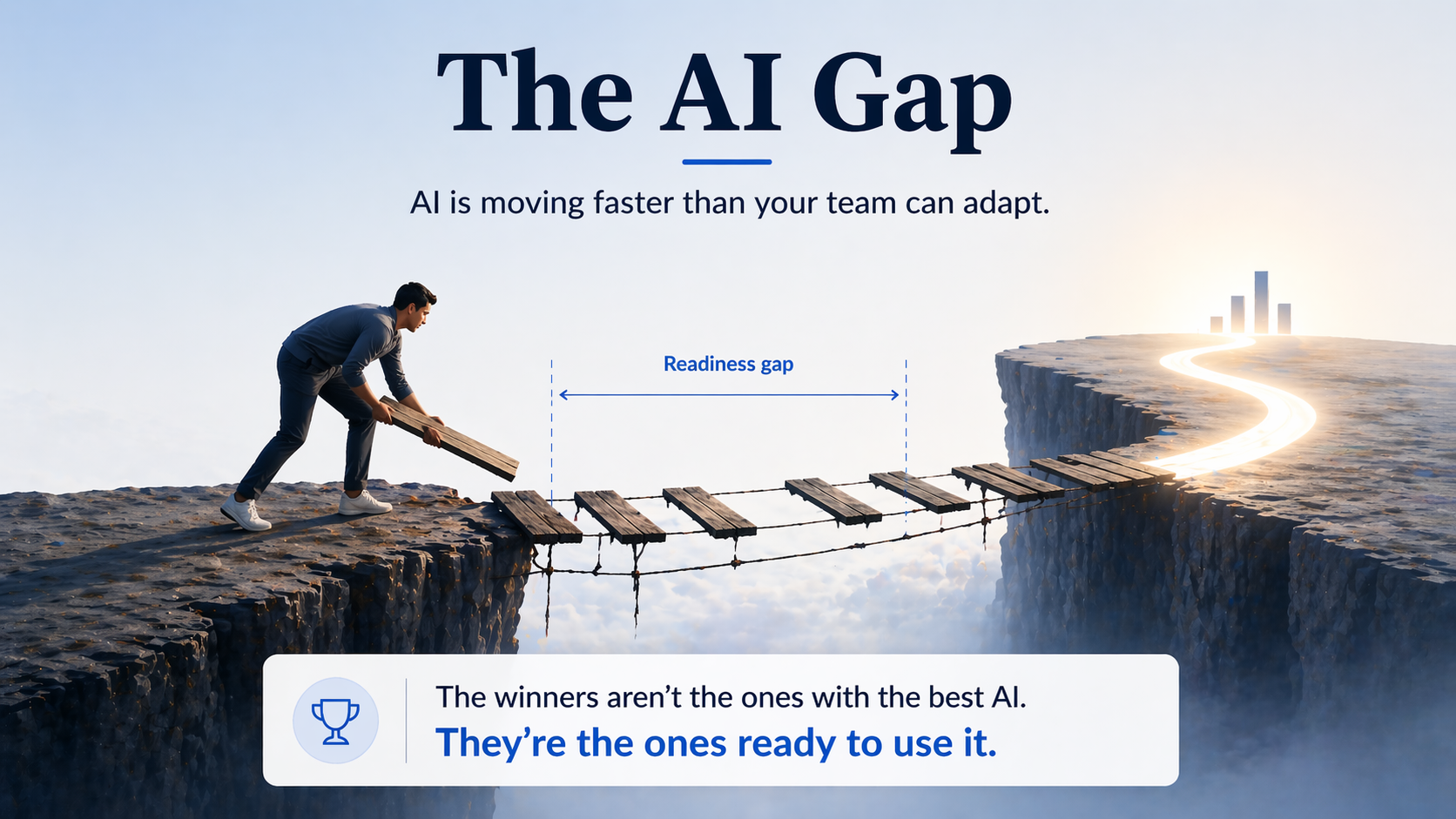
The AI Gap Is Real and Growing
At the conference, one idea kept surfacing again and again. Some companies are accelerating rapidly while others are standing still.
This is the AI gap.
On one side, you have teams using AI to:
- Automate communication with prospects and residents
- Surface insights from data in real time
- Improve team productivity across leasing, maintenance, and operations
On the other side, you have teams still relying on manual workflows, fragmented systems, and reactive decision making.
The gap between these two groups is widening. And it will not close on its own.
Leasing AI and the Reinvention of the Customer Journey
One of the most immediate areas of transformation is leasing.
Leasing AI is reshaping how prospects discover, engage, and convert into residents.
Instead of slow response times and missed opportunities, AI enables:
- Instant responses to inquiries
- Automated qualification of leads
- Smart scheduling of tours
- Continuous engagement throughout the leasing funnel
The result is not just efficiency. It is a dramatically better customer experience.
Prospects feel seen. Questions get answered. Friction disappears.
And when that happens, conversion rates rise.
Health Scores AI: Predicting Problems Before They Happen
Another major theme from the conference was the concept of relationship health.
Property management is not just about units and leases. It is about relationships with:
- Owners
- Residents
- Vendors
The challenge has always been visibility. By the time a relationship breaks down, the damage is already done.
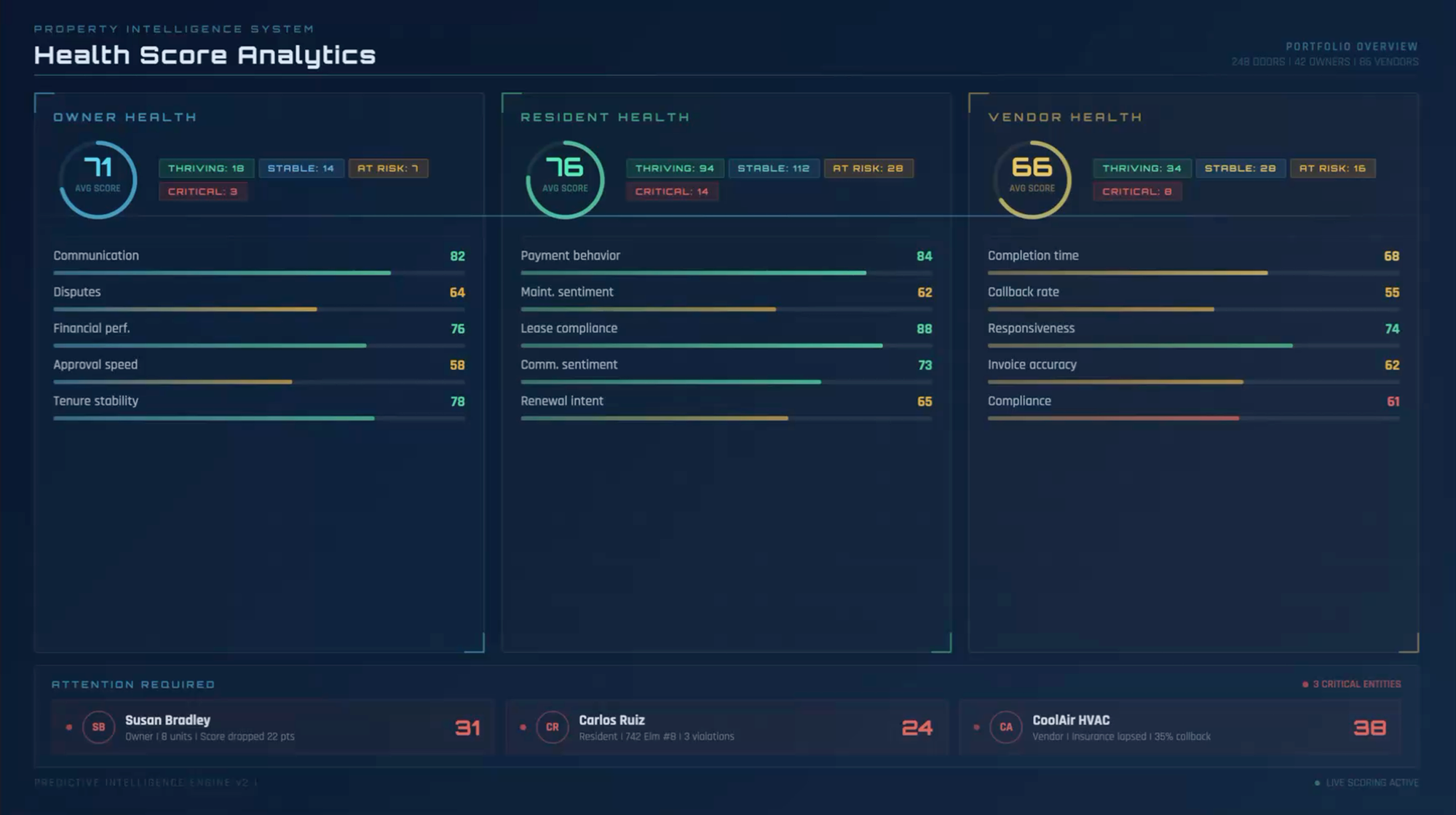
This is where health scores AI changes the game.
By combining behavioral data, communication patterns, and operational metrics, AI can create dynamic health scores that signal risk early.
For example:
- An owner who is receiving slower responses and declining performance metrics
- A resident who has increasing maintenance requests and negative sentiment
- A vendor with inconsistent completion times or quality issues
These signals allow teams to act proactively instead of reactively.
Instead of managing problems, you start preventing them.
Improving Team Productivity with AI
One of the most powerful outcomes of AI adoption is not automation alone. It is focus.
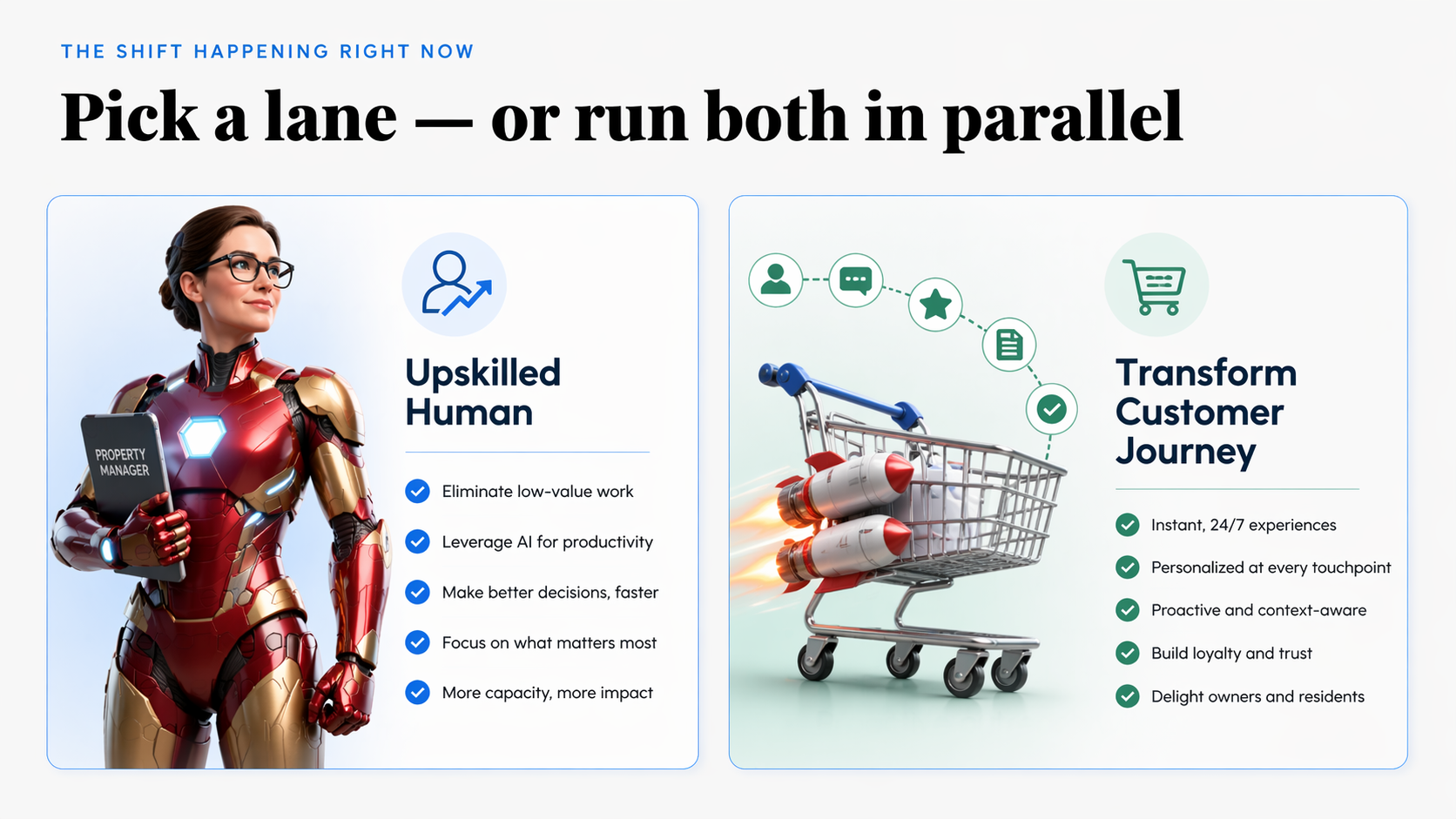
When repetitive tasks are handled by AI, teams can redirect their energy toward high value work:
- Building stronger owner relationships
- Delivering better resident experiences
- Solving complex operational challenges
Improving team productivity is not about working harder. It is about removing the noise that gets in the way of meaningful work.
AI becomes the quiet operator in the background, handling the grind so humans can elevate the experience.
The New Operating Model for Property Management
The companies pulling ahead are not just adding AI tools. They are rethinking how their business operates.
They are building systems where:
- Data flows seamlessly across the organization
- AI enhances every stage of the customer journey
- Teams are empowered with insights, not buried in tasks
This is not incremental improvement. It is a new operating model.
And much like the Industrial Revolution, the shift rewards those who move early and decisively.
The Opportunity Ahead
We are still in the early innings.
The technology will continue to evolve. The tools will become more powerful. The use cases will expand.
But the core truth is already clear.
AI is not a feature. It is infrastructure.
For property management companies, the question is no longer whether to adopt AI. It is how quickly you can integrate it into the fabric of your business.
Because the companies that do will not just keep up.
They will lead.